wbur.org
support wbur today!
Listen to this show
Digital Youth

Post your comments below

Thanksgiving is upon us. Time to reconnect over the bird and stuffing with family and friends, old memories, maybe new friends and shared intimacies.

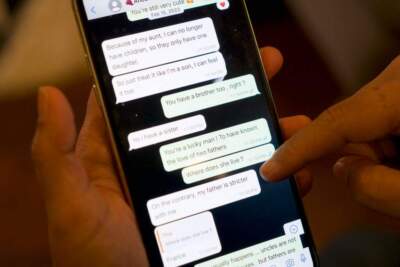
But guess what? A new generation of American teens is doing all that every day, nearly every minute of every day — without the turkey — online.

The Internet is producing the most socially plugged in, caught up, networked and aware generation since — what? Maybe the Mayflower.

Parents worry about all that time online. A big new study says, “chill.” The kids are OK.

This hour, On Point: Gen Web speaks, about the new American youth culture unfolding on the Internet.

You can join the conversation. Is your head spinning from all this social media? How do you keep up with all your friends, and how many of them are behind the computer screen?

-Tom Ashbrook

Guests:

Mizuko “Mimi” Ito, a research scientist at the University of California, Irvine, studying new media use, especially among young people in the U.S. and Japan. She’s the lead researcher on a recently completed three-year study of teens and the Internet by the Digital Youth Project, supported by the MacArthur Foundation.

Ebele Anidi, a freshman at Harvard University. He was an intern with On Point last spring.

Anna Huerta, a junior at the University of Southern California, where she studies interactive media.

Sarah Polin, a freshman at Redondo Union High School in Redondo Beach, California.

More links:

You can read a two-page overview of the MacArthur Foundation study, download the 30-page white paper, and examine the full report.


Tags: , ,


Listener comments
  • As a university instructor (art history), I am very concerned with what I am witnessing as an interesting and disturbing change in the way students are thinking about and responding to assignments that require an extended amount of time exploring and critically analyzing problems. In the process of trying to discover why this new generation of teens is having increasing difficulties with attentiveness and developing long term memory I encountered the following information that seems to help explain this problem.

    Whereas internet connectivity can enhance certain cognitive abilities, there are adverse effects. Two or so years ago it has been shown that it causes a condition of learned attention deficit. The October/November 208 issue of Scientific American Mind points out that staying “busy monitoring buddy lists and instant messages can create a distracted mental state called continuous partial attention,” “place the brain in a heightened state of stress” such that “they no longer have time to reflect, contemplate or make thoughtful decisions” and “exist in a state of constant crisis—on alert for a new contact of bit of exciting news or information at any moment” and “learn to thrive on the perpetual connectivity. I feeds their ego and sense of self-worth, and it becomes irresistible.” While this seems like a good thing, it leads to a feeling of “being spaced out, fatigued, irritable and distracted, as if they are in a ‘digital fog’” This new form of stress is called “’techno-brain burnout” which “is threatening to become an epidemic.”

    This can “even reshape the underlying brain structure.” (Due to the instinctively signaling by the brain of the “adrenal grand to secrete cortisone and adrenaline, that boosts energy” but over time actually impairs cognition, lead to depression, and alter the neural circuitry in the hippocampus, amygdale and prefrontal cortex—the regions that control mood ant thought.”)

    Information from the October/November 2008 issue of Scientific American Mind: “Meet your iBrain: How the technologies that have become part of our daily lives are changing the way we think” by Gary Small and Gigi Vorgan.

    Sincerely,

    Charles Maddox

    James Madison University
    Harrisonburg, Virginia

    Posted by Charles, on November 26th, 2008 at 10:07 am EST
  • I’m 22 so I’m not part of the youth culture but I was raised with the internet. I do not think the internet helps people truely communicate because unfortunately many of the sites that offer networking(I.E myspace) stress design and posting materials from other sources as opposed to original content or personal communication.

    Posted by Sam E., on November 26th, 2008 at 10:12 am EST
  • I don’t these social network harm teens’ ability to communicate. Quite the opposite. But what harms them is the concept of being plugged in all the time, of feeling like they can’t live not being near a computer screen or cell phone. This isn’t unique to kids. After all, “Crackberry addiction” doesn’t really afflict teens. But what’s harmful about this is that it never gives your brain a rest. It never gives you a chance to think, to contemplate, to let your mind wander.

    Posted by Brian, on November 26th, 2008 at 10:26 am EST
  • I am 45 and can’t live without being online although all my time is not spent on social networking but it started out that way. Now I’ve become a news/blog junkie.

    I am witnessing my 15 year old daughter (who is fully online & texting) interacting with her young 10 year old cousin who just got her first email account. What wonderful letters they have been sending to each other. The older is teaching the younger about using wall paper and what different icons & abbrevitions (ex. LOL) mean. I think it’s great.

    Posted by yvonne H., on November 26th, 2008 at 10:28 am EST
  • I guess in response to your question of how often am I plugged in? Well, probably at least 6 hours a day. I think it’s important to note though I use the internet for in addition to the normal uses as my primary research tool for homework, watching television, more recently watching movies, and also listening to music and radio.

    Posted by Sam E., on November 26th, 2008 at 10:28 am EST
  • I am happy to hear this topic covered on your show. I am also a big fan of the research / work MacArthur is doing in this field.

    I am Boston-based and I just returned from a research trip called Millennials Changing America, where I talked to young people engaged in some element of social change and discussed with them how elements of modern digital connectivity played into their work. I’ll be posting the results of this tour on Change.org’s blog network as well as other observations of generational characteristics along the way http://millennials.change.org.

    I am interested to read the comments here (especially those from the teacher), and I look forward to staying tuned to read more.

    I hope this finds you all well,
    Alex Steed

    Posted by Alex Steed, on November 26th, 2008 at 10:31 am EST
  • This is very interesting and I think the networking and socializing on that level are great. We’ve seen it at play in politics, as well, from organizing protests to political campaigns. Between that and getting to know as well as maintaining friendships when folks are far away, this is all fantastic.

    My concern is wondering how young people are doing when they are actually face to face, actual human to human interaction in the real present. I know not too long ago there was talk about a new issue of “social phobia” on the rise, largely attributed to people having all their human contact being virtual and not being able to deal with the actual human contact.

    Maybe that was more of an issue with the population for whome this was all new … i.e., those who didn’t grow up with it, and the youth of today have managed both.

    Did you see anything related to this?

    Posted by tania, on November 26th, 2008 at 10:31 am EST
  • One thing that’s missing from this discussion is the impact on the kids on the other side of the digital divide. Because of the integrated real life and virtual life socializing, is this driving a deeper socioeconomic rift.

    Posted by Everette, on November 26th, 2008 at 10:32 am EST
  • Tania raises a good question that I think I can speak to.

    I’m an administrator in college housing. I’ve been doing it professoinally for 6 years. When I was an undergrad in 1997, the floor in my residence hall at Boston University was one of the first to get the EtherNet, and we were hooked. It was great.

    I love the benefits of sites like Facebook. Now, as a professional, I can see that our students certainly are more connected than any other generation.

    What I am concerned about is that I have seen conflict after conflict between students, most of them between roommates but sometimes with their neighbors. The communication during these conflicts is often limited to Facebook or text messaging. These communication media are missing the nuances of face-to-face communication — things like facial expressions, tones of voice, and body language. Too often, our students come to a Resident Advisor or and administrator after it’s too late for a face-to-face meeting to resolve the conflict.

    It’s very easy to hide behind the computer. Unfortunately, roommate conflicts are complicated and deserve a medium complex enough to solve them. Talking with someone may cost a little extra, but you’ll pay a lot more in the long run if you don’t meet face-to-face. I’m working to encourage our students to understand this, but it’s a slow process and I feel like I’m swimming upstream.

    Posted by Jonathan, on November 26th, 2008 at 10:42 am EST
  • I believe that there is a significant portion of american teens that do not have access to this technology due to low family income. Might this trend not tend to increase the income or class segregation that already pervades our society?

    Posted by Louis Hanna, on November 26th, 2008 at 10:43 am EST
  • I think Everette’s question is pretty relevant – especially considering the research that I did, which was admittedly anecdotal and intended to document a generational narrative. The way I met with the young people I did was that I put the word out that I would be traveling throughout the US and wanted to talk with young people engaged with Internet-reliant/related-activism on various blog networks. A small meme started and word continued to spread. The group of people who got in touch was rather homogeneous – pretty similar looking, similar backgrounds, and similar focuses in activism (left-leaning when political). As much as I hoped to not have to rely on an echo-chamber network to reach out to this community, it still happened partially, and the chamber, at this moment, appears to come from a similar set of backgrounds, no matter how many walls promise to be broken down eventually by the supposedly great-equalizing force that is the Internet.

    This is not to say, however, that the Internet has not been used by the relatively powerless in order to create more power than existed before it came around. It is to point out, though, that the communities I met who self-identify with its continued use as a culture are relatively homogeneous in background.

    Posted by Alex Steed, on November 26th, 2008 at 10:44 am EST
  • What bothers me most about the “plugged in” generation is the apparent inability to determine when it is appropriate to use this technology.
    I cite the following examples that I have personally witnessed:
    Sending text messages while in class;
    Submitting information cut’n'paste from the internet;
    Answering the cell phone at the theater;
    Answering the cell phone at the movies;
    Refusing to stop a call or put it on hold while conducting business.

    Posted by David, on November 26th, 2008 at 10:45 am EST
  • Youth who only maintain friendships on line may feel depressed because their relationships lack face to face communication with eye contact, expressions of empathy, affirmations and hugs.

    We need to be creating places and conditions where young people have more opportunities to sit together and really get to know and appreciate each other.

    Text messaging is no substitute for this kind of connection.

    Posted by Barbara Hildt, on November 26th, 2008 at 10:46 am EST
  • I’m officially a Curmudgeon – I turned 40 this year. I saw my nephew go to college this year, and what I believe the biggest difference between our freshman year experiences is communications technology. He’s keeping more “attached” to his high school friends- and is having trouble becoming fully committed and immersed in his new University society.

    When I was at college there was a kid whose father was way up in the phone company. He had a card that he could use to call anywhere, he was always on the phone, he didn’t have many friends at the University, I think because he was still very much plugged into his past. I couldn’t afford the calls, I made a lot of friends, and had a very robust college experience.

    Could this technology, powerful and helpfull as it is, be a barrier to new “authentic” relationships and opportunities?

    Posted by Greggo, on November 26th, 2008 at 10:47 am EST
  • I bristle a bit at the blanket assumption that this most recent generation is more “technically savvy” than the last. I’m 32 so I fall in that previous generation, and I can tell you that nearly all of the things that have been discussed on the show so far (My Space, i.e. Web Sites, Text Chatting, i.e. IRC) have been possible since I was in high school.

    The difference is that it took a great deal of knowledge and effort to use those technologies. (i.e. You needed to know HTML to make a web site, and you needed to know networking information and text commands to properly connect to and use IRC.)

    The difference is that geeks of my generation (in the more classic sense of the word, meaning a nerd with technical skills) have made the tools to use these existing technologies, smaller, faster, cheaper, and most importantly EASIER to use.

    The youths of this current generation are on average no more technically savvy than even my parents, the difference is that they have grown up with and taken the time to learn how to use the technology that people of my generation have been making so easy to use that they don’t even need to RTFM anymore.

    Posted by Charles Caplan, on November 26th, 2008 at 10:49 am EST
  • I did, at one point, speak with an arts education director at a youth center in Michigan. He said that the majority of the kids who come into the center now, all of the lowest income brackets, interact much differently than they did five years ago. They come in, he says, and use the center’s computers to interact on MySpace or Facebook or to look at videos on YouTube. This pattern breaks when they pause to show their friends at the center funny or entertaining videos, and then they go back to watching. This reminds me of an essay that I’ll have to track down again – one written by David Foster Wallace – that mentions the effect social television watching had on the dialog in modern fiction novels. It suggests that as people sat down to watch television together, they began talking in 4-minute long commercial break bursts, and then going back to watching the show. This manifests itself in short, abbreviated conversations featured in books today.

    The observation, though, is meant to point out that there ARE people in lower income brackets who are interacting with the same tools, though their consistency of access is likely much different. The digital divide, however, is not what it was in this country 5 or ten years ago. What I do worry about is access provided by basic Internet (dial-up, cable, etc.) versus the Internet constructed for smart phones and other costly Internet tools. This has the potential of creating a substantial access barrier where users might all have access, but the amount of access will vary substantially.

    Posted by Alex Steed, on November 26th, 2008 at 10:51 am EST
  • The assumption that “everyone” is doing all this and/or will soon be doing all this assumes everyone can pay for it. To have voice, messaging and data on your phone runs easily over $100/mo. Add broadband and any kind of landline at home (and I realize fewer people do the land line, but humor me) and we’re talking at least another $100. This is grocery money, survival money, to many people. It’s more than 25% of the takehome pay on minimum wage. When did basic human communication become a matter of such significant dollars and cents, and what does it portend for our civic life and culture?

    Posted by Laura Behrens, on November 26th, 2008 at 10:51 am EST
  • I’m 25yrs old and married and my wife and I have separate Facebook accounts but we also have contact we people not much younger than ourselves who seem to come from a different world when it comes to communication.

    I’m worried that today’s youth’s are not connecting with people in the way they should. Too many don’t know how to give a firm hand shake and look you in the eye when they speak. They don’t say excuse me when they bump into you. Young people seem to feel entitled to have the new IPhone even though they don’t seem to be taking responsibility for the bill or the cost of the IPhone or laptops their parents have worked to provide for them.

    Separately, the kids that felt lonely before in our nation’s school would feel totally out of place today since chances are they don’t have the means to have a cell phone or a computer to stay connected and their exclusion from their peers is worse today than it would have been a decade ago.

    Posted by Nick Boyd, on November 26th, 2008 at 10:52 am EST
  • Tom,

    It is not just the kids! I am currently debating with three unrelated adult friends, who are mad at me for not signing up for Facebook and MySpace. They do not understand why I am not interested in this type of social networking. They are adults (ages between 45-65).

    Many people keep sending me invitations to read/look at their profiles…I find it rather strange to read the advertised versions of my old friends. They do not realize that I know them well already. I find it that since they found these mediums and since they seem to be so entertained by them, they are acting very much like kids.

    Posted by Yesim, on November 26th, 2008 at 10:54 am EST
  • I’m in my late 30s and grew up watching many hours of television each day. When I got to college I met people who had no tv growing up and they coincidentally became my closest friends (including my wife). I regret all the time I spent staring at a screen when they were reading, playing outside, etc.

    The problem with the Facebook generation, in my opinion, is that the kids (and adults) are spending too much time on screen and are not able to be doing all the things that their parents and grandparents did as children.

    Posted by Sam Tarlin, on November 26th, 2008 at 10:55 am EST
  • One thing that people seem to give little consideration to is severing relationships. Catching up with old friends and accumulating acquaintances can be fun, but what happens when the relationship “expires” for lack of a better word? How will people go about severing the “Friend” which would have naturally faded away after a couple of conversations, but now continues to follow?

    Posted by Jim, on November 26th, 2008 at 10:58 am EST
  • There are are two points I want to raise here. One concerns our reality as creatures with physical bodies, the second concerns the short shrift that is being given to “downtime” these days.

    First, to bring back a point Tom mentioned earlier in the hour. He basically said humans are social beings. Well, at the root of this, we are embodied beings. The disembodied nature of interaction online might have something to do with rates of depression that have been reported in many studies (including the one I think David quoted). We have 5 – maybe 6 senses, yet we are now often just tapping one (sight) or two (sight and hearing).

    The other concern I have is with all the negative connotations that have been heaped on to the idea of not being connected these days. I recall a wall ad I saw recently while moving through an airport. It read something lie this: “20 minutes…you can wait…or communicate” I think this really nails the underlying nature of the “attention economy” that has developed in many industrialized countries over the last 20 or 30 years. In all of this there is a kind if human/machine inversion taking place.

    It used to be we were talking about making computers “user friendly.” Now, we are really seeing a kind of movement, if subtle, that is making humans more and more computer friendly. The attention economy (and I forget who coined that term) seems to be all about making our media environment or media ecology suited for fast, automatic responses that doesn’t require, doesn’t want, and doesn’t leave any room for reflection.

    Posted by Robert, on November 26th, 2008 at 10:59 am EST
  • ” The problem with the Facebook generation, in my opinion, is that the kids (and adults) are spending too much time on screen and are not able to be doing all the things that their parents and grandparents did as children.”

    I was going to say that it’s not that they’re not able to but rather that they choose not to. But as I thought about it, I realized that in many cases the kids really aren’t able to. But it’s not because of the availability of technology. It’s because their parents and grandparents grew up in places where they could walk around, bike around and easily meet their friends. So many of today’s kids live in the suburbs or exurbs where they can’t get anywhere without mom or dad driving them, where there are no woods to explore, where it’s too dangerous to bike or walk. Human contact is harder in these places. Technology doesn’t create this void, it fills it.

    Posted by Brian, on November 26th, 2008 at 11:01 am EST
  • In response to Sam’s most recent post:

    I’d be interested to read your take on Clay Shirky’s suggestions regarding “social surplus.”

    http://www.shirky.com/herecomeseverybody/2008/04/looking-for-the-mouse.html

    Posted by Alex Steed, on November 26th, 2008 at 11:01 am EST
  • Hi, I wanted to share my experience with this online communication/socializing:

    10-12 years ago, I was hearing the same thing when I was a teenager in the Boston area during the AOL / 90’s / .com Boom. I heard the same concerns of disconnect back then that never materialized. Back then several of the features of Facebook were available, however they all resided at different websites. When I was about 21 (after the emergence of MySpace, before Facebook), I was connected wirelessly via Sidekick & Blackberry. In the 4 years since, my communications habits have changed significantly. I do use FB quite often, but I prefer face to face socializing. Part of this may be the fact that I’m out in South Dakota and it can get lonely on the plains. I think that joining the Air Force has also changed my social habits.

    In the long run, I think the internet will be a great tool to keep in touch with people, but the lonely human heart will seek out actual physical contact as these teens move away from home to new jobs and new opportunities. People will find what is appropriate to use via trial and error.

    Also, I’ve noticed a significant difference in how rural (midwest / south) areas socialize in comparison to urban coastal areas. There is definitely a lack of trust amongst rural youth of people met online, while coastal urban kids don’t have as much of a problem with it.

    Posted by Senior Airman, on November 26th, 2008 at 11:02 am EST
  • I’m surprised that the serious problem of cyberbullying hasn’t come up in the conversation. The Internet is the new playground, but insidious because the bullying occurs through emails,texting, iming, etc. and isn’t face-to-face.

    Anonymity is easy online. I taught high school for many years and am currently writing a mystery series. My latest book, The Body in the Gallery, has a subplot involving cyberbullying among middle school kids. It has been a flashpoint. I love the Internet and my son is a computer technician. We are a wired family, but I urge parents and teachers to go to sites like Wiredsafety.org (also Wiredkids.org for kids) and Cyberbully.com.

    The most important advice, for younger kids especially, is to get the computer out of private space, a bedroom, and into public space, the kitchen or family room. Make sure your child understands that what he or she posts can be forwarded and changed. He or she may think something is going to a six friends, but it’s six million, in fact.

    Having the computer in a space where an adult is present—not policing, just in the same room—acts as a check. The greatest danger to kids on the Internet is not from adults, but other kids. In the past the bully was a loner-big with a five o’clock shadow in fourth grade. Now the bullies are the popular kids and others join them in targeting someone to avoid being targeted themselves. Adolescence is a vulnerable time. We can work within our schools and communities to protect teens even as we applaud the new technology.

    Posted by Katherine Hall Page, on November 26th, 2008 at 11:02 am EST
  • The previous comment does not constitute endorsement by the United States Air Force or the Department of Defense.

    Posted by Senior Airman, on November 26th, 2008 at 11:04 am EST
  • The most interesting groups I met were those that were committed to bridging the on and offline in a substantial way. Focus the Nation worked hard to put together a grass-roots organizational structure that worked to bring together thousands of young people nationally AND THEN they used the Internet to organize them (everyone in their staff is under 25). I Love Mountains is an initiative that works hard to bridge on and offline action by still going and speaking to groups face-to-face, as does Free Press. They’re doing so because it actually gets results re: organizing and fundraising. At least with regard to social action online, people will eventually find a way to synthesize these two worlds so that we are not all awkward/lacking the ability to interact in a “normal” way (or what the past generations consider normal, at least). Why? It gets better results.

    Posted by Alex Steed, on November 26th, 2008 at 11:08 am EST
  • As a grandparent of kids who are starting to get “connected” online I was interested in all the information and learning that can take place. However, when the young woman age 14 remarked that if she was cut off from this use for a week it would be terrible. Makes me wonder about life priorities among our teens. I was also disturbed by her comment that she is networking from the time she gets up to when she goes to bed.
    Are there any teens today who spend time practicing a musical instrument, writing poetry, painting or designing, playing baseball with dad or mom, family camping for weeks, without some electronic item in their hand. I hope so!

    Posted by Ruth Magill, on November 26th, 2008 at 11:11 am EST
  • “Are there any teens today who spend time practicing a musical instrument, writing poetry, painting or designing, playing baseball with dad or mom, family camping for weeks, without some electronic item in their hand.”

    Of course there are. As Fareed Zakaria points out in his book “The Post American World,” our country is a manufacturer of ideas, so a lot of this movement shouldn’t be surprising. But it doesn’t mean we’re not still pursuing “old fashioned” ways to have fun. I go running in South Boston every day and I see kids playing baseball during the seasons, kids at the beach, etc. Young bands still preform, my nephews and nieces all studied some sort of instrument, and many of my friends are quite artistic. As a staff-member at a youth leadership summit in Maine, I don’t necessarily see a difference in activities among kids – just a different generational attitude (and one for the positive, to be honest).

    Posted by Alex Steed, on November 26th, 2008 at 11:15 am EST
  • Great show and a topic that is affecting all of us!

    My current job search experience has given me an opportunity to realize how much things have changed, while I was not paying attention, busy with task at hand rather than keeping skills and knowledge up to date.

    After 20 years of continuous employment which included the introduction of Personal Computers to the workplace I find it difficult to identify a starting point to “catch up.”

    One job posting described the trend very well – the job title was “New Media Visionary”. In this new world of web sites and databases I have found little intuitive knowledge regarding employment needs when speaking to employers – even at job fairs and personal networking contacts – no one knows of opportunities but they say “check the web site”.

    Each employer’s site requires a separate profile, username, password and the same information posted on dozens if not hundreds of your other profiles generated just to make an initial inquiry or apply for specific openings. While access to information is plentiful the pure volume makes it very difficult to be productive. I am very interested to see how business process continues to evolve with this next generation of new media users.

    Posted by Peter, on November 26th, 2008 at 11:19 am EST
  • I think there’s a difference between the moment to moment little exchanges had over IM or Facebook and the lasting, deep connections and friendships that can form from online communities. I have been involved in several online networking sites including DeviantArt.com (a “MySpace” for artists) as well as smaller BBS communities. There are people I’ve met in these forums that I’ve spoken to nearly every day for over 7 years; they are very dear and close to me just as any friends I know face to face. I think it’s important to note that not all online relationships and communications are fleeting; there can be long lasting continuity.

    Posted by Sarah Forde, on November 26th, 2008 at 11:51 am EST
  • What I find interesting about both the Digital Media Project report and the Frontline Growing Up Online program is that both support much earlier findings on youth in a digital era. In Growing Up Digital: The Rise of the Net Generation (McGraw-Hill, 1999), Don Tapscott describes the online work, play, and learning habits of teens heavily engaged in Internet use. He also projects many ways in which their adult lives are likely to change, as a result of growing up in a digital environment.

    In Learning from Cyber-Savvy Students: How Internet-Age Kids Impact Classroom Learning (Stylus, 2000), I explored the question of how classroom teaching and learning is affected by students’ experience using the Internet for their own purposes. I am fascinated that, although the Internet media are now much more sophisticated, the comments made by teens in both the Frontline special and the Digital Youth Project report echo closely the voices of teens in my research done ten years earlier.

    The consistency of results across the past ten years of research leads me to believe that the changes highlighted by the Digital Youth Project report are far more than passing trends. The impact on formal education is profound and must be acknowledged, if schools are to remain at all relevant to teens.

    Posted by Anne Hird, on November 26th, 2008 at 12:10 pm EST
  • I am a junior high school science teacher in Salt Lake City, UT. I have noticed a negative consequence of online communication with my students in the classroom. There is a different language the students use when they are communicating online consisting of a shorthand format to speed up communication. Some examples are, “cuz” instead of because, “4″ instead of for, etc.. I have noticed that the students do not always understand when it is appropriate to use this form of writing. On classroom assignments, students will commonly write in this shorthand format.

    Posted by Rob, on November 26th, 2008 at 1:04 pm EST
  • Some of the topics being raised are actually discussed in the report: http://digitalyouth.ischool.berkeley.edu/report

    - Digital divide issues are discussed in the Media Ecologies Chapter.
    - Bullying is discussed in the Friendship Chapter

    Also, as far as physical mobility, there are studies in the U.K. that suggest that young people have less physical mobility than ever before. In our fieldwork, we found that many of the young people we interviewed were unable to leave the house or, if they were, their friends weren’t. For many, online encounters with friends were more accessible than face-to-face ones even though F2F was much preferred. This is referenced briefly in the Friendship chapter.

    Posted by zephoria, on November 26th, 2008 at 1:45 pm EST
  • Sorry, but I don’t buy it. I’m pretty plugged in, but I think that people who are constantly doing nothing but texting and posting on-line really have nothing to say in all that communication. They are communicating nothing. And this goes for adults as well, not just kids. They spend no time thinking, reading, learning, or even, for that matter, listening to each other. Who’s reading all this text if everybody is a blogger?

    Posted by Not Buyin' It, on November 26th, 2008 at 8:18 pm EST
  • [...] read more | digg story [...]

    Posted by The Rise of the Digitial Youth « The NPR Fanboy, on November 26th, 2008 at 8:20 pm EST
  • It’s not just kids. I’m in my high-30’s and have been raised as part of the highly touted mobile workforce. I’m a single mom and I work. If it were not for online networking, I would hardly ever speak to another adult.

    Maybe these kids are being “well trained.”

    (They do need to work on composition, grammar and spelling, though.)

    Posted by Laura, on November 26th, 2008 at 9:15 pm EST
  • I think Not Buyin’ It makes an important point: fewer and fewer people are reading long pieces of writing and thinking quietly offline. With a barrage of crawler-like stuff coming at you (tweets, chat, email, RSS, etc. it’s hard for many people to focus and think deeply.

    I think illiteracy isn’t just not knowing how to read, it’s also not reading relevant information or being able to sort out the wheat from the chaff.

    I’m 57 and I’ve been using all of this stuff since its birth (Apple II, fidonet, etc.) and my house has been wired longer than most. I spend a considerable amount of each day online doing many of the things talked about here, however, I still read long and deep articles daily, not just headlines, and I read periodicals and books, online and off.

    There’s a difference between skimming headlines on the New York Times web site and reading articles from start to finish. I’m pretty sure that folks who are putting a lot of time and energy into sharing exactly what they’re doing at every moment are probably not putting as much time into reading and thinking deeply about the important stuff. That’s a form of illiteracy caused by techno ADD.

    Posted by Richard, on November 26th, 2008 at 11:14 pm EST
  • Look around, what do you see in public spaces.
    Hordes of people on cell phones, text messaging, plugged into I-Pods while walking, sitting, driving, on bicycles, trains and airplanes.

    I almost hit the girl the other day while driving because she was listening to her I-pod while on her bike. She ran the red light and was completly unaware of what was happening in traffic.

    I all for technology, I’m online as much as the next person, however I think people spend to much time ‘networking’ online with total strangers.

    Facebook is another thing that a lot of high school and college kids should try to control better.
    More employers are looking for the facebook pages and any documented bad behavior can and will cost you a job.

    Why do people spend all this time talking on cell phones while driving?

    Please stop using your cellphones while driving!

    Posted by jeff, on November 27th, 2008 at 11:37 am EST
  • I feel like most people hooked on Myspace, Facebook, etc., have no connection to reality at all. Like that young girl on the program said, she is “connected” to her friends from the moment she wakes up till the moment she goes to bed. i don’t want to reiterate what’s already been said, but what kind of future will we have if people continue to eschew reality in favor of the constructed personalities of the internet? Already, kids are so caught up in the world they’ve made for themselves that they don’t understand social problems (beyond banners they post on their Facebook). Not to sound like an old grouch (I’m 26), but internet activism is not in any way facing social problems. These people think that by posting a banner claiming “World Peace” or “End Hunger”, they are showing their humanity and being altruistic, but all they are doing is pressing a button to get attention for their “humane, altruistic attitudes”.
    I go to college, and I’m amazed at how many students say they “can’t survive” without their phones, laptops, etc. This may have been cute at one point, but now it’s banal and lame. There is a lot of suffering in this world, and the social problems we face continue to get worse. These kids who “can’t live” without their connections are so caught up in their own drama that they aren’t willing to consider the many children who die every day of hunger, or the poor, or the corrupt governments of the world, or continuous wars, or global warming, etc…
    Sorry about the length of this, i just get tired of trying to learn in class, surrounded by beeping cell phones and ungrateful brats who think they are entitled to ignorance simply because they live in an affluent society. If this is the future, than we don’t have one.

    Posted by Jesse, on November 27th, 2008 at 11:38 am EST
  • As a wise person recently said, “Internet is the digital version of crack cocaine,” it’s necessary to self-regulate the time spent online in order to maintain relationships in real life.

    As with all things, balance is good, but it’s too evident that when it comes to Internet, the balance has shifted towards the unwholesome trends and it needs to be corrected.

    Go out for a walk, enjoy the full moon and stars and the planets, grow some tomatoes. You’ll find all these activities much more rewarding than clicking on a button to join a “cause” on Facebook. Make a snow-angel in the field, not on the Internet.

    Posted by AV, on November 27th, 2008 at 4:45 pm EST
  • I am an elementatry school teacher and I listened to your broadcast with great interest. The school in which I teach has some homeless children and many of children come from families that can’t afford computers and internet service. The school has limited connectivity and many of the students that I see daily have never set foot in the public library for any reason, so don’t know that the internet is available to them there. I am concerned that a two class society (those young people that are part of the digital community and the opportunities it provides and those who are not) is another challenge my students will have to meet. They have so many reason to feel like they are on the outside, here is another.

    Posted by Joanne, on November 28th, 2008 at 5:20 pm EST
  • I’ve just scanned the list of comments above me (!) and I didn’t see what worries me most deeply about our digital, chatty, online children. One year soon, these children and young adults will start having their own babies. What will IPhone hands do with living, speechless,needy infants? Parenting is a basic ongoing primitive body-based relationship for which they have even less natural preparation than their own harried parents, who gave them a deficit of real attention as they flew from jobs to after-school lessons. The one thing that babies and young children need from a mother figure is physical nurturing attention. What will this new generation do?

    Posted by Joan Sutherland, on November 29th, 2008 at 12:15 am EST
  • It’s not limited to youth. I’m 55.5 years. I share photos on IM, FaceBook, videoconference (been doing that since 1987 in one form or another), use Skype, unified messaging (there’s the nexus for a new show, Tom! Unified Messaging is the new variant), etc. My 87 year old mudder did all of this, too, up to the day before she died. Great study. To the parent–Joan Sutherland–what are YOU going to do to engage your children to use new technologies, despite abilities and disabilities. I just implemented a remote video sign language interpretation program for my hearing-impaired students. So, opportunities abound for the disabled and the abled. Be positive, contribute, and, most of all, don’t be afraid to get out there for your child.

    Posted by Eric, on December 2nd, 2008 at 9:41 am EST
  • [...] worth a few minutes to listen to a conversation about the study facilitated by NPR’s “On Point” host, Tom Ashbrook. One question raised reflects a basic concern about technology: What [...]

    Posted by Learning From Teens: Digital Youth Project — BodiMojo, on December 2nd, 2008 at 9:20 pm EST
Recent Shows
Rick Bass and the Montana Wild
Thursday, July 2, 2009 image

Author Rick Bass walks us through the changing seasons of the Montana wilderness, in his new book, “The Wild Marsh.”

Comments [8]
 
Controlling the American Appetite
Thursday, July 2, 2009 image

Former FDA chief David Kessler took on Big Tobacco. Now he tells us how the food industry plays with our brain chemistry, and turns us into hyper-eaters.

Comments [73]
On Point Blog
India, China and the Climate

The passage of the House climate bill – discussed in our first hour today – has been greeted with enthusiasm in many quarters. But in some ways, the real question is whether a global framework can be established in Copenhagen in December, when countries will negotiate a new international treaty to curb greenhouse gases. After all, America emits only [...]

More » | Comments [1]
 
Michael, Ed, and Farrah

The week-in-the-news roundtable always involves tough choices on sound clips – what to include, what to leave out. Amid all the pressing hard news, we often give a nod to a notable person who’s passed away. But this week brought, well, a ridiculous range of choices. So we gave a nod to them all in the roundtable today. And [...]

More »
 
Planet Money, On Point — Your Questions!

On Wednesday night, June 24, On Point will tape a show before an audience in Boston with two stars of NPR’s “Planet Money,” Adam Davidson and David Kestenbaum. We need your online questions to put to them — about anything from the roots of the economic crisis to NPR’s coverage.
What’s your question about the [...]

More » | Comments [18]