wbur.org
support wbur today!
Listen to this story
How to Live on $2 a Day
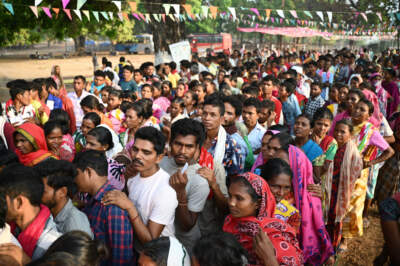
Madhupur, Bangladesh, March 2009. Photo: Robin Saidman /VitalEdgeAid.org

A participant in the "financial diaries" research in Madhupur, Bangladesh, March 2009. Photo: Robin Saidman /VitalEdgeAid.org

Post your comments below

More than 2.7 billion people in the world live on two dollars a day — or less. For most Americans that may sound impossible. Or like a living hell.

In fact, there is much more nuance to it, to that life, than images of hungry kids with tin cups might suggest.

A detailed new study of the planet’s poorest billions finds a lot of sophistication among those poor in handling money. They don’t have much. They have to stretch it. Save it. Borrow and lend. For food, a home, even retirement. On two bucks a day.

We might learn something. This hour, On Point: Half the world, on two dollars a day.

You can join the conversation. Tell us what you think — here on this page, on Twitter, and on Facebook.

-Tom Ashbrook

Guests:

Daryl Collins joins us in our studio. She was project director of the most recent Financial Diaries Project at the University of Cape Town in South Africa, which researched how poor people in South Africa spend, borrow and save. She is also a senior associate at Bankable Frontier Associates, a Boston-based consulting firm that tries to find ways to extend financial services to underserved people worldwide. She is co-author of the new book “Portfolios of the Poor: How the World’s Poor Live on $2 Dollars a Day.”

Read the first chapter (pdf) of “Portfolios of the Poor.”

Stuart Rutherford joins us from Exeter, England. He did the first Financial Diaries project, in Bangladesh, and is co-author of “Portfolios of the Poor: How the World’s Poor Live on $2 Dollars a Day.” He’s also the author of “The Poor and their Money” (2000) and founder of SafeSave, a non-profit based in Dhaka, Bangladesh that provides saving sevices to the poor there. He has consulted with the world-famous Grameen Bank, the microfinance bank bounced by Nobel Prize winner Mohamed Yunus.

Lufefe joins us from Langa, a township outside Cape Town, South Africa (he asked that we not use his surname). He’s married and a father of two. His wife and children live in their village and he lives in a hostel area and sends money back to them. He has a job, not always steady and makes about 3,000 to 4,000 Rand a month, which translates to about $3 per day for each member of his immediate family.

Below is a slideshow of pictures from Langa Township, near Cape Town, where researchers recruited many of the South Africa study’s participants. You can also open the slideshow at full-screen size on Flickr or click on each photo below to view captions. (Photos: Robin Saidman / VitalEdgeAid.org).


Tags: , , ,


Listener comments
  • Exchange rates are a big part of the puzzle surprisingly money isn’t worth exactly the same everywhere in the world.

    Posted by Sam E., on May 26th, 2009 at 8:00 am EDT
  • You ruined the surprise, Sam E!

    Posted by felmkes, on June 9th, 2009 at 6:56 am EDT
  • Hundreds of millions are very poor, but the $2 a day is how journalists like Tom Ashbrook, without an economics background, measure this.

    If onne considerds ppp (purchasing power parity) the poorest are better off than living on $700/year or $2 a day.

    Posted by Carl, on June 9th, 2009 at 7:27 am EDT
  • Actually, $2/day isn’t a calculation arrived at by journalists without economics backgrounds. It is a number calculated by economists and used widely by everyone in the field of international development and microfinance.

    Posted by susan, on June 9th, 2009 at 9:24 am EDT
  • in many regions, the poor are able to live off the land. it’s cheaper and much healthier even though they are still very poor. bartering is also huge. and much is subsidized by wealthier countries (india can afford to let poor people have cell phones with extraordinarily cheap calling plans when they have over a billion people). that’s not a bad thing, it’s just the way it is.

    Posted by marcus, on June 9th, 2009 at 9:32 am EDT
  • In there is a lesson Americans can learn, as joblessness increases and many jobs are being shipped overseas, manufacturing and technology is exported, health care and education becoming out of reach for many more each year, a government living on borrowed money and borrowed time, it won’t be long for people in this country having to live on less and less and less, of course Jesus could come early and a rapture will take care of us all. Or that is the new world order we have been sold in to.

    Posted by MIOHAMMED N. RAZAVI, DALEVILLE, AL, on June 9th, 2009 at 9:33 am EDT
  • Dear God .. Tom please shut the … up and let us hear from BOTH of your guest. So far, you have not added much to the conversation. They seem to be very knowledgable.

    How can you take call before your guest have had an oppurtunity to lay out more than the most superficial treatment of the book.

    Enough of the cliche

    Posted by anInterestedListener, on June 9th, 2009 at 10:24 am EDT
  • Please don’t loose site of the fact that micro lending is no substitute for the large scale capitalization required for underdeveloped communities to compete in world agricultural and other markets. Without trade with the wider world there can be no growth.

    Posted by Rocaru, on June 9th, 2009 at 10:30 am EDT
  • You’re discussing instruments for financial efficiency. Don’t
    overlook tools for energy efficiency in daily activities.

    One factor in poverty is deforestation because of cooking needs.
    Drought and decreased arability ensues. Efficient cooking stoves
    greatly reduce firewood needs, as well as respiratory risks. There
    are initiatives to distribute millions of better stoves. Look up
    Goodstove, or wood-gas stoves. The stove designs are easily
    copyable, and stoves can be made from a variety of found materials.

    Posted by Dylan Pocock, on June 9th, 2009 at 10:41 am EDT
  • I enjoyed your show today. Just want to say that it is possible to live comfortably on $15,000. a year in Boston as a single parent with two kids, as we have done so for 15 years. We don’t take help from state agencies, and only rely on my many part-time jobs.

    It isn’t easy, but my children and I have what we need and never feel poor. We have great lives. All we really need is shelter, food, our health, and each other. Books are free from the library, and all over the Boston area are free arts and cultural events. We enjoy the largess of the Brahmins who gave us places like the Arboretum and other outdoor spaces.

    I appreciate your willingness to look at this subject, but get frustrated that middle-class Americans still do not see themselves as rich. The lady that called in and said her family was struggling on $47,000. a year sounded rich from my perspective.

    I am highly educated and work hard. Poverty for us came from being a single parent household and having no relatives or any family to act as support systems. I have found that when one sinks to the bottom of the economic ladder in the US, it is hard to climb out no matter how hard one works or how educated one is. There are class structures that keep the poor down. But this is the subject of another show.

    Posted by sarah zappa, on June 9th, 2009 at 4:37 pm EDT
  • Hey there – I am the lady who called in saying we were living on 47,000.00 a year. However I did not say we were struggling. Give us some credit we went from 83 to 47; and this was of our own choosing. We were not forced out of the job market due to this economy. We are fortunate to keep a nice home for a large extended family. And since pulling back have savings tucked away for 6 months of living expenses. The motivation for all of this was the birth of our only child when my husband and I were 47&46. Chasing money for daycare @ 800.00 per month seemed artificial compared to the pure joy of being with our child.

    In fact I want to get to the point were we can live on less. I have admiration for those who do so. And know this can be done with grace and dignity while contributing to community and society.

    The new poor could and should be the new cool. I would love to see this and be part of it. Instead of tech geeks – poverty geeks. I’d like to be part of a movment like that. I haven’t felt this free since I was hitch hiking through the South Pacific in the early 80’s. And yes rich is so often based on one’s perspective.

    Posted by Sandra, on June 9th, 2009 at 5:25 pm EDT
  • If you think about it the vast majority of human existence people were hunter gatherers so we lived off $0 a day. Somehow people got by.

    Posted by Stephen, on June 9th, 2009 at 5:30 pm EDT
  • How to do it? Eat a lot of really basic food – same stuff every day – manioc, rice, beans, corn or daal depending on the country. Don’t spend money on health care unless it’s urgent. Share with your neighbors – this is a huge piece of it – wealth allows you to be isolated. Make it yourself. Fix it when it breaks. Squat on government land. Experience injustice and be treated as less of a human being because of your circumstances.

    Posted by Aquene Freechild, on June 9th, 2009 at 7:13 pm EDT
  • If there were scientists to be heard today who know the toll upon the planet that greater income causes, we might not be hearing so much about how to create more money across the globe. Doesn’t prosperity or even improved poverty mean more global warming, in a ratio that will pretty well doom us all?
    I suspect that more than a certain number of people with more than a certain income will tip us (the product of the number of people times the money they are each spending, more or less), and we need environmental solutions in place and economic guidance available if not stringently imposed so as to direct growing incomes into channels that are sustainable.

    Posted by Ellen Dibble, on June 9th, 2009 at 10:10 pm EDT
  • This was an excellent program. The guests must be allowed to tell their story, which happened this time. The guests were very articulate.

    Posted by Gary, on June 10th, 2009 at 1:01 am EDT
  • If you think about it the vast majority of human existence people were hunter gatherers so we lived off $0 a day. Somehow people got by. Interesting statement, and the point is?

    Sandra are you kidding me? The poor being the “new cool”?
    “Poverty geeks”… I think you should ask a single mom in South Central LA or an unemployed family living in West Virginia. How about those folks living in tents all across the country because they lost jobs and houses.

    I think you ask them how “cool” being poor is before making such absurd statements.

    Being poor is not fun, it’s not healthy, it sucks.
    Talk to the people who live in the slums of Calcutta and see if they like being poor and sick. Talk to the 16 year old Chinese factory worker making 50 cents and hour doing 12 to 16 hour days making your underwear. Ask them why they left their poor farm village to work in the city. $47k a year is far from poor. It’s middle class.

    Try raising your family on half that or less in any state in this country, then you’ll see how “cool” it is.
    Most likely this “coolness” will come in the winter when you have to keep the heat off because you can’t afford to heat your home.

    Posted by putney swope, on June 10th, 2009 at 8:56 am EDT
  • This $2 may be “…a number calculated by economists and used widely by everyone in the field of international development and microfinance.” (and no wonder)…yet is used in misleading fashion, more often than not.

    Non-monetary living/exchange still thrives in many parts of the world. So $2 might be shocking in absolute terms…but, it just does not represent an adequate measure of the way many people live their lives. That is not to say that $2/- can always get you a “good” life…but for some people what we call subsistence-living is not a demeaning form of life…

    Posted by Umang Kumar, on June 10th, 2009 at 10:06 am EDT
  • Dear Putney,
    Thank you for your insight. And I have experienced all that you have pointed out plus much more.
    My mother was a Korean war bride; a single mother of three who worked as a bar maid while going to night school to get away from an abusive druken PTSD GI husband.
    Growing up we had our lights turned off, we hid from bill collectors, we faced numerous evictions, we scrounge for food, we dreaded and cowered from the constant physical and mental abuse.
    It was the 60-70’s we were looked down upon because of our race, my mother suffered from the stigma of being a divorced woman in a Catholic community as children we were taunted by others in this community. We were all sexually abused by care givers. There isn’t any type of human exploitation that I have not experienced as a child and continue to see as an adult where I volunteer as a reading coach at a tittle one school.
    I sincerely hope that you don’t have a firsthand knowlege of what you have written of. I am tried of this “Poverty Porn” and the mean spirited individuals who from their armchair radical lives have nothing nice to say.
    My experiences should give me every right to be angry and mean spirited however I choose to be joyfull.
    Sandra

    Posted by sandra, on June 10th, 2009 at 10:16 am EDT
  • sandra I’ve been pretty fortunate, I was not brought up in a poor household and your experiences is what I’m talking about. Poverty is no joke and the children are the untold victims here. We don’t hear to much about the children living in poverty who are getting life threatening infections due to poor dental health.

    Google Mountain Dew Mouth an affliction that seems to infect mostly poor children from the mountainous area known as Appalachia and other areas in the South. This story is as much about poverty, bad health care and how corporations pray on the poor.

    Posted by putney swope, on June 10th, 2009 at 11:21 am EDT
  • getting life threatening infections due to poor dental health.
    oh putney,
    that brings back such memories; it was my first dental check-up at age four. My mother was told I had eighteen cavities and that she was a blankity blank mother and that I was a lazy child. My sister who was six was beaten for not taking better care of me and we were never taken back to the dentist as children because we had embarrassed my mother. As a young adult I always felt too ashamed to go to the dentist. Fortunately I had a good union plan that came w/ my job as a waitress at a hotel and had alot of corrective and cosmetic work done. years later I realized that my unfortunate immigrant mother did not know the difference between orange juice and orange soda-pop. in the first grade when it was apparent that I needed vision correction; I was told that I was lazy and stupid. it has been forty odd years since all of that, my sister and I are our mother’s care givers and we give her orange juice, but not too much because she is diabetic. oops my mother needs help finding her eye-glasses. Pardon us if we joke, that is where the humor comes in; we choose to be happy and look for the best in people.
    Every summer I help a friend who is a dentist – she is in rual wyoming and gives free dental care to children of meth addicted mothers.
    I sincerly hope the best for you.
    Sandra

    Posted by sandra, on June 10th, 2009 at 4:53 pm EDT
  • HORRIBLE INTERUPTIONS IN PODCAST. PLEASE STOP!!!

    Posted by wanpibau, on June 11th, 2009 at 12:19 pm EDT
  • Even today, in spite of all the evidence, few people understand or acknowledge the wisdom of Thomas Malthus.

    Sadly, our world is overpopulated, and, consequently, billions of people live in abject poverty. However, few people understand or are even aware of the relationship between population density, the costs of resources, and quality of life.

    Here in the United States we have already witnessed some of the negative effects of population explosion, such as water shortages and increased amounts of pollution. Sadly, our population is projected to surpass 450 million by 2050.

    It would be great if Tom could do a show about overpopulation and perhaps interview a guests from NumbersUSA.com and an organization called Negative Population Growth.

    Posted by Frank the Underemployed Professional, on June 12th, 2009 at 8:02 am EDT
  • Frank the Underemployed Professional,

    and I say AMEN

    Posted by MIOHAMMED N. RAZAVI, DALEVILLE, AL, on June 16th, 2009 at 12:52 pm EDT
  • [...] Public Radio’s “On the Point” talked to Daryl Collins and Stuart Rutherford about Portfolios of the Poor…and, wonderfully, to one of [...]

    Posted by David Roodman’s Microfinance Open Book Blog » Blog Archive » Actual Poor Person, Live on the Air, on June 17th, 2009 at 5:39 pm EDT
  • health is a state of physical,social,mental and spiritual well being…the underdeveloped and developing nations have a good substantial back up and a strong foundation on the former 3 mentioned.. which to an extend drives them through tougher times fairly well..

    Posted by anto kurian, on June 18th, 2009 at 9:36 am EDT
  • Here’s a link to a report about he increased hunger around the world….

    http://news.yahoo.com/s/ap/20090619/ap_on_re_eu/eu_un_world_hunger

    We really need to be dealing with the fundamental issue here, which is the dire maldistribution of wealth both within and between countries, and the role of international capitalism and greed … Now we learn that Archer Daniels Midland (an underwriter of NPR) is buying up vast quantities of corn in Latin America and holding it back from the market in order to create artificial shortages, thus raising the retail price of corn, the basic staple of the population, creating more hunger and desperation. And international mining companies (e.g., GoldCorp), funded by the World Bank and the IMF, doing open-pit cyanide-leaching gold mining in Guatemala and elsewhere, with absolutely no environmental regulation — thus environmental devastation, health problems, human rights violations, all in the name of profit. It is no longer called colonialism, but it sure looks like it. These are some of the dynamics that create more and more maldistribution of wealth in the world, with dire consequences for human lives.

    Posted by Eliza Strode, on June 19th, 2009 at 8:30 am EDT
On Point Today
The Pandora Effect
Friday, November 20, 2009 image

We’ll talk with the founder of Pandora, the online music service that claims it knows what you’ll want to hear.

Comments [56]
 
Week in the News
Friday, November 20, 2009 image

Obama in China. Healthcare crunch time in the Senate. And the mammogram controversy rages on. Our weekly news roundtable goes behind the headlines.

Comments [51]

Recent Shows
Poker: America’s Game
Thursday, November 19, 2009 image

Poker and American history. How the game of presidents, cowboys, gangsters, and online gamblers helped shape America.

Comments [9]
 
Google vs. Murdoch
Thursday, November 19, 2009 image

Rupert Murdoch wants to block the search giant from scooping free content from his newspapers. We’ll look at the staredown.

Comments [131]
On Point Blog
Michael Wolff and Jeff Jarvis on Murdoch v. Google

We had a rousing discussion about Google vs. Murdoch, and what it says about the whole future of news, with Michael Wolff, Jeff Jarvis, and Steven Brill. Here’s what Wolff and Jarvis had to say about the delusions of both Murdoch and Google.

More » | Comments [18]
 
Video: Google CEO Eric Schmidt

Last week, host Tom Ashbrook was on stage with Google CEO Eric Schmidt, asking him about some of the biggest technology and business issues of our time.
It was part of an MIT event held on Thursday, Nov. 5, to commemorate computer science professor Michael Hammer, who died last year. Here’s video of the full interview, courtesy of WBUR.org:

Among other things, Schmidt said the possibilities [...]

More » | Comments [4]
 
California, here we come! And we need your questions!

On Point is headed west!
No, no. Not for good. Only for one show. But it’s a very special show!  The NPR station in Thousand Oaks, California – KCLU – is celebrating their 15th anniversary. We’re lucky to have been on their airwaves for nearly seven years, and they invited us out west to host a live [...]

More » | Comments [10]